Devlog #1: what we're working on
How the race works, how the driver makes decisions and how we check it. Plus a few screenshots from the debugging tool.
Long Run is a racing team simulator built for realism. You are the team owner, the race engineer, the head of development and HR. The job has a lot of tasks in it, and you can delegate any of them. For the team's decisions to mean anything, the race has to be honest: speed comes from physics and the driver, not from a random number. That is why almost all the work right now goes into modelling the race. The systems have to work together: physics, the driver's brain, the weather, the car, everything affects the race.
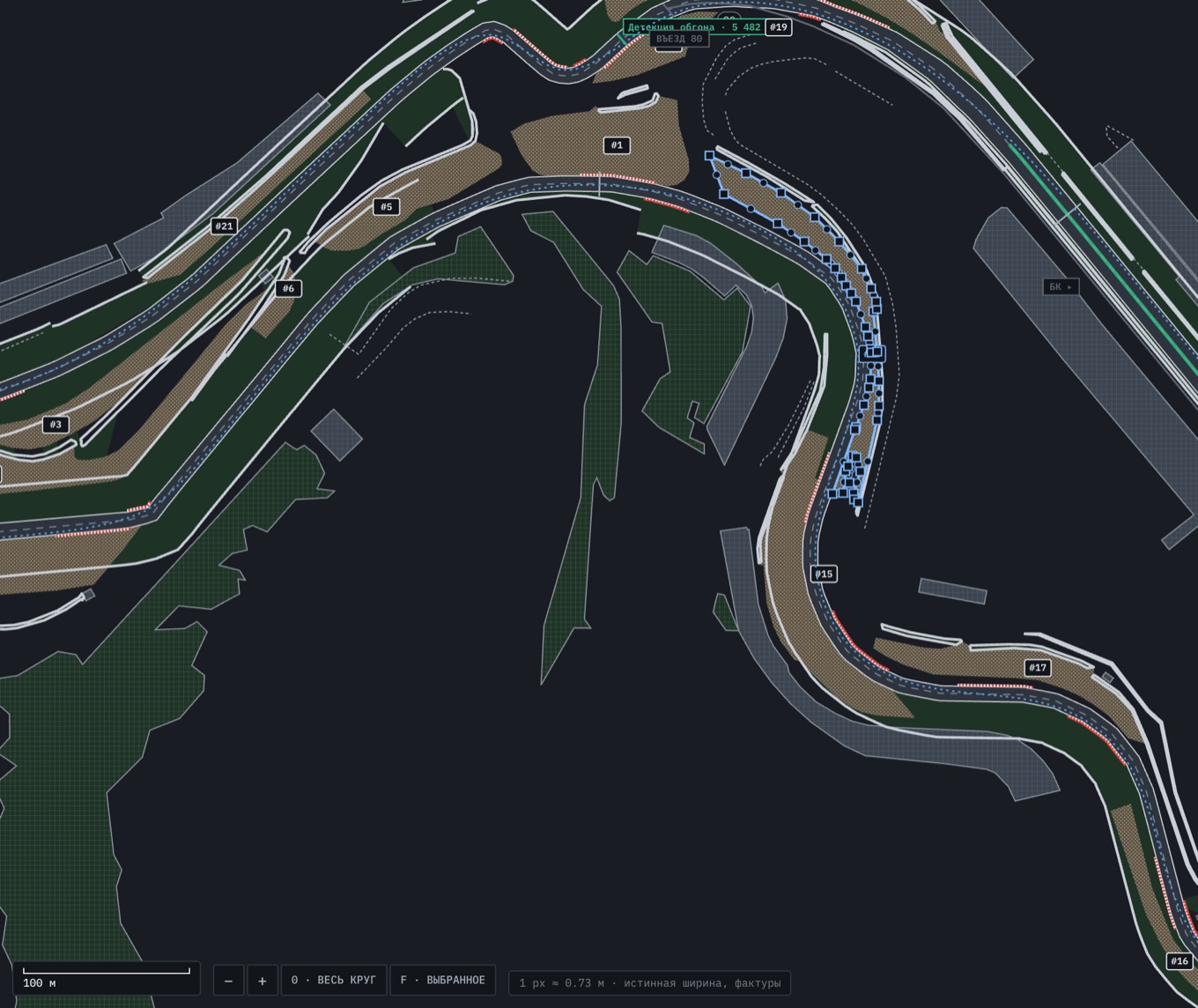
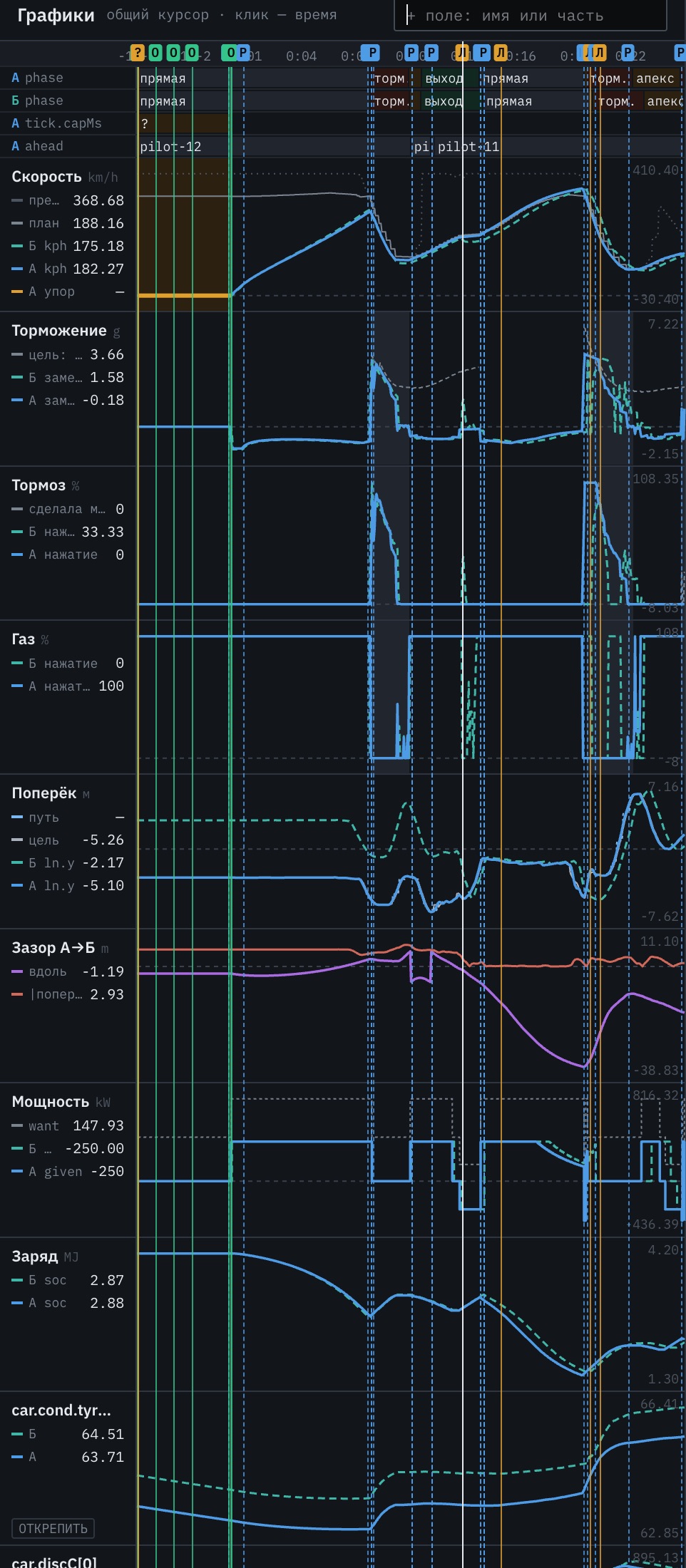
The screenshots below are from my development tool, not the game's interface.
Race physics
Every car is a physical body. Several times a second the model works out the tyres, the brakes, downforce, drag, the engine and much more.
A tyre is not just a plus or minus to pace. It heats up and cools down, and how it wears depends on the surface, its temperature and how hard it is driven. Grip changes with load, temperature and wear. The brake discs heat up and cool down too.
The power unit and its settings follow the regulations of the track or the year: the battery, deployment and recharging on every lap.
The weather is not the same over the whole track: temperature, wind, clouds and rain are different at every point of it. Rain can wet only part of the track.
The driver
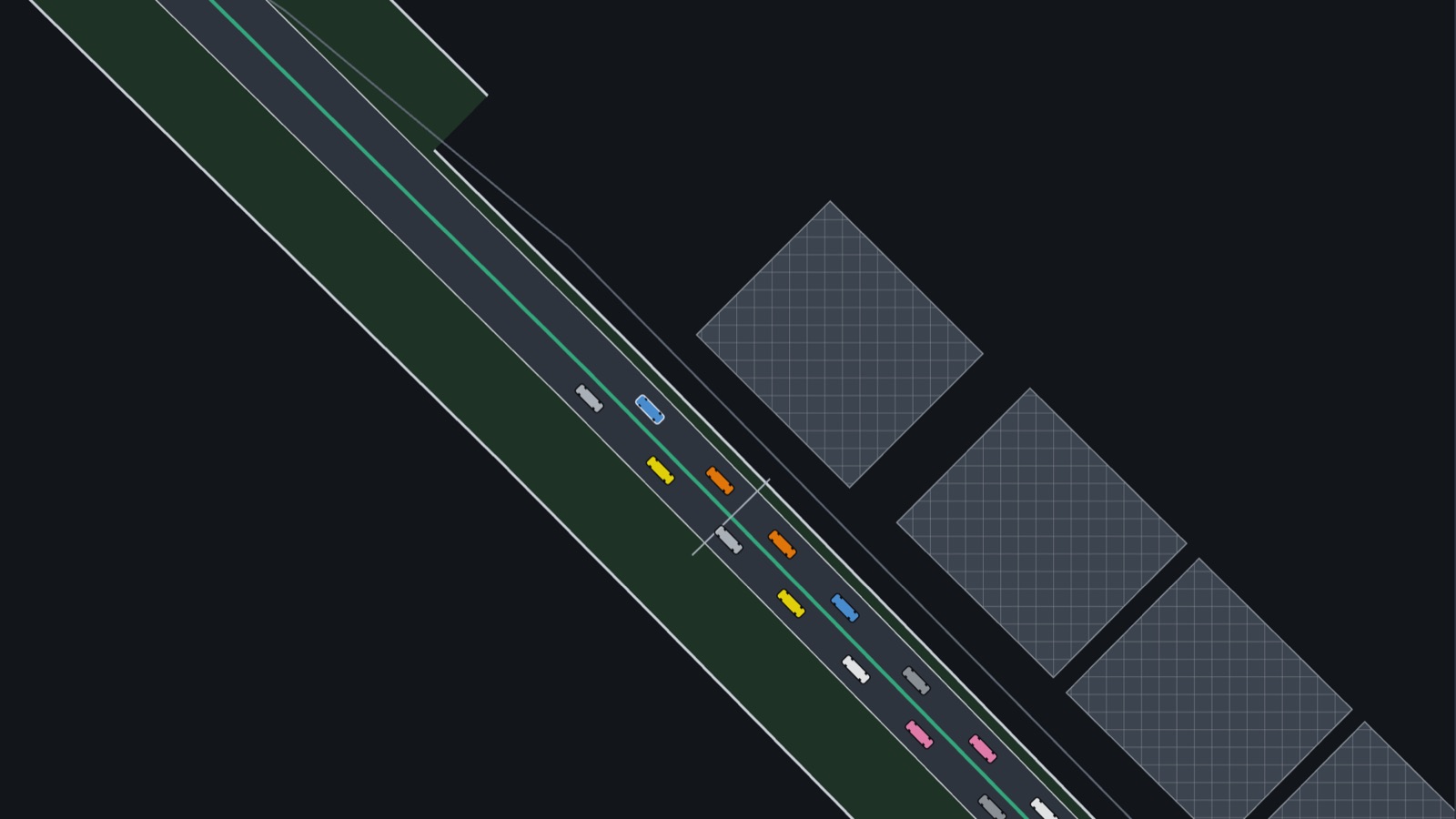
The driver drives the car himself. The car does not follow a line on its own: the brake and throttle pedals, the gear changes, the steering are all the driver's. In every corner he runs at his own share of the limit: under braking, at the apex and on the exit. A mistake is not chance: the driver gets tired, picks the pace, saves the tyres, attacks and defends according to his skills and what he knows.
Right now we are working hard on the driver's brain. He sees the situation on the road and decides what to do: he asks himself questions and works out what is best.
Debugging the race
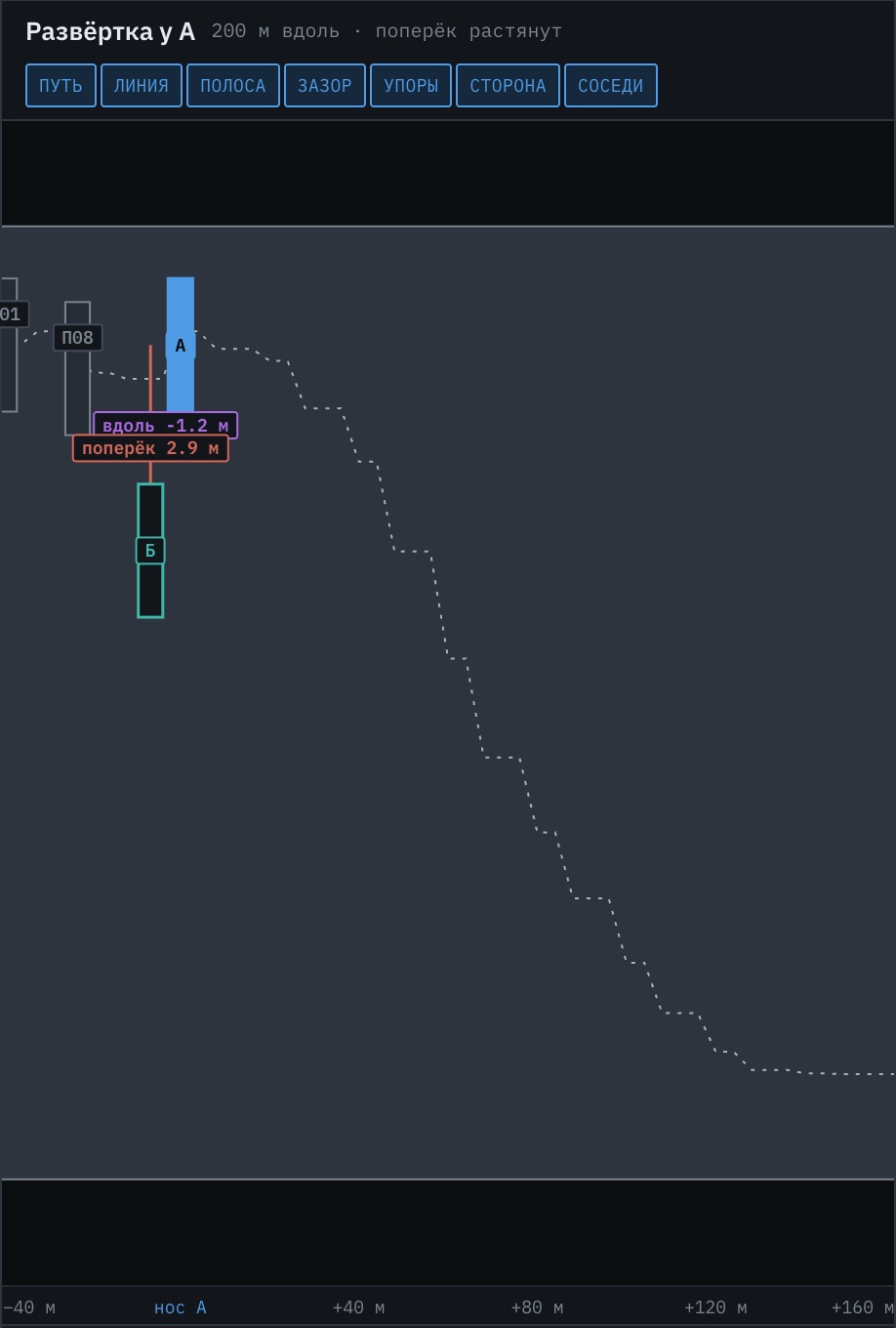
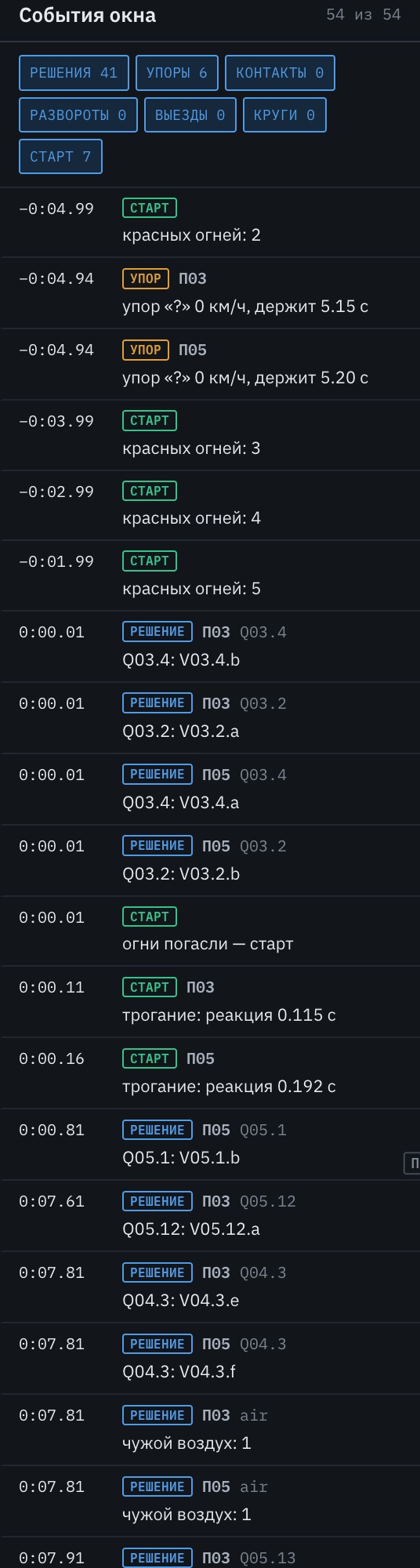
The race is split into ticks, fractions of a second. The debug section logs everything on every tick for every car and shows it in an interface with graphs. So when I go through a moment, I see every decision taken and can look into it in detail.
The debug section has helped a lot since we started polishing the simulation: it makes artefacts easy to track down.
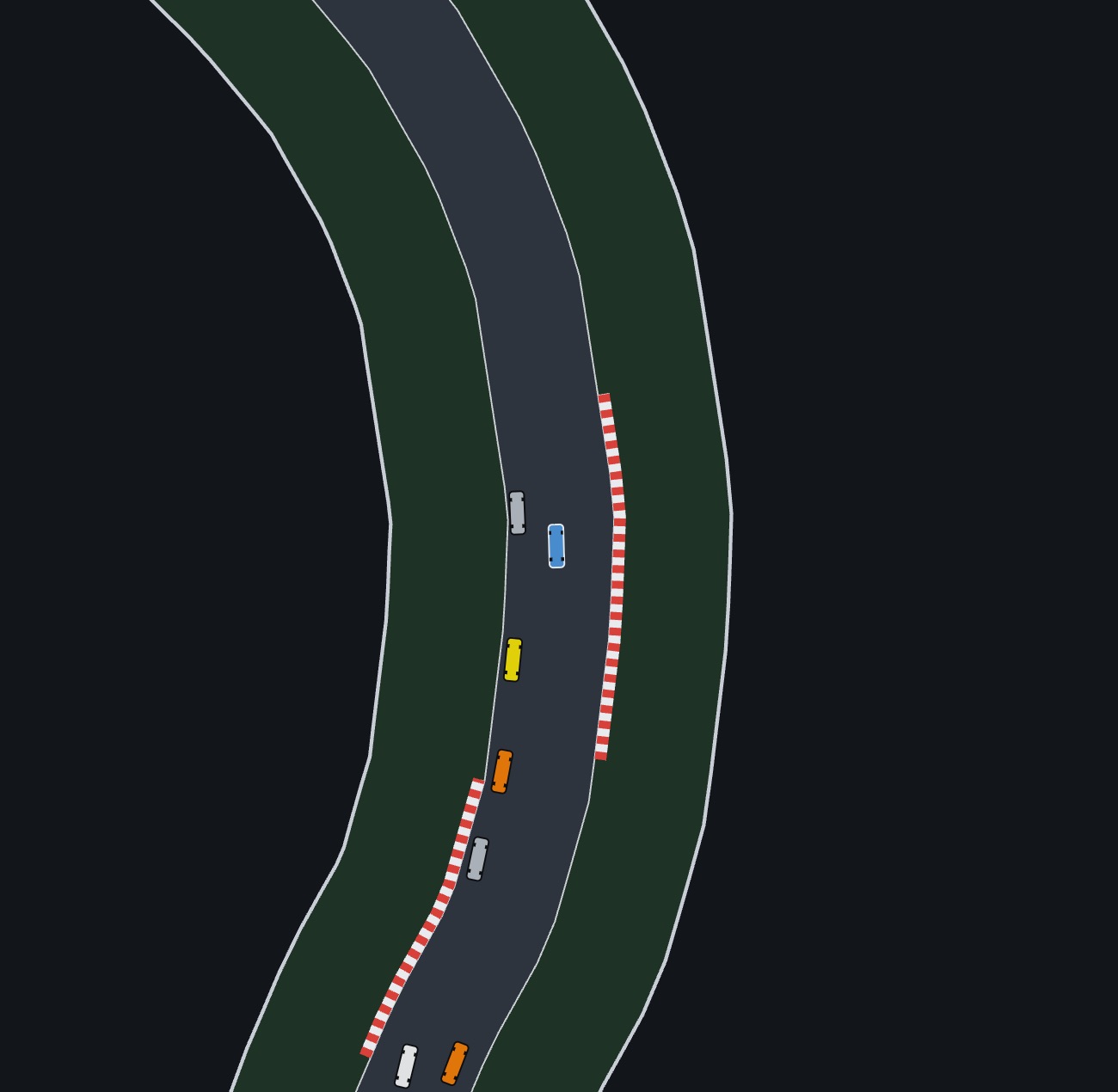
And of course, there is a track editor