What Long Run is
Who you are in the game, how the race is worked out, what already works and what we are still building.
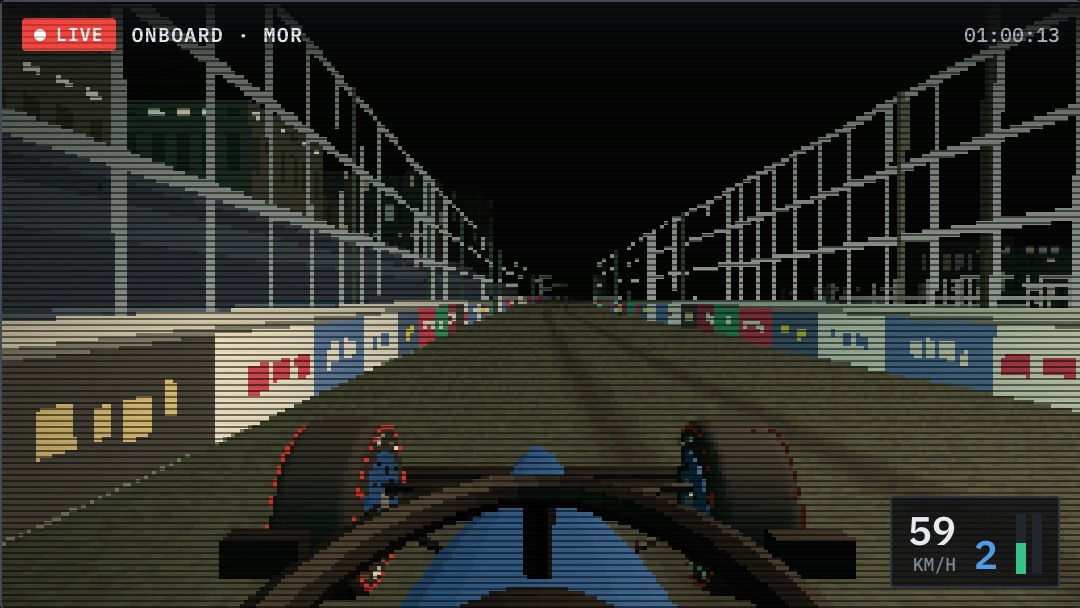
Long Run is a racing team owner simulator. You don't drive. You hire drivers and engineers, decide what the budget goes on, and run the race from the pit wall. The driver drives the car, and physics decides where it finishes.
The pictures in this post are prototypes of the systems from the home page. The teams and drivers in them are fictional, and the game's interface will still change.
The race
Every car is a physical body. The forces on the tyres, the brakes and the air are worked out 20 times a second. Who finishes first depends on those forces, on the tyres, the energy and the drivers' decisions. A high rating alone doesn't win a race.
A tyre has two temperatures, surface and core, and wear. Grip depends on load, temperature and wear. A tyre heats up where it slides. That is why overheating in another car's wake feeds itself: a hot tyre grips less, slides more and heats up further. The brake discs heat up and cool down too.
Each era has its own power unit: the battery and the energy per lap follow its regulations. The start is worked out from revs, clutch and wheelspin.
The weather is worked out over the whole area around the track. Temperature, humidity, wind, clouds and rain are different at every point and change every second. Rain can wet only part of the track. For the asphalt, the game keeps the water on it and the rubber laid down.
The driver
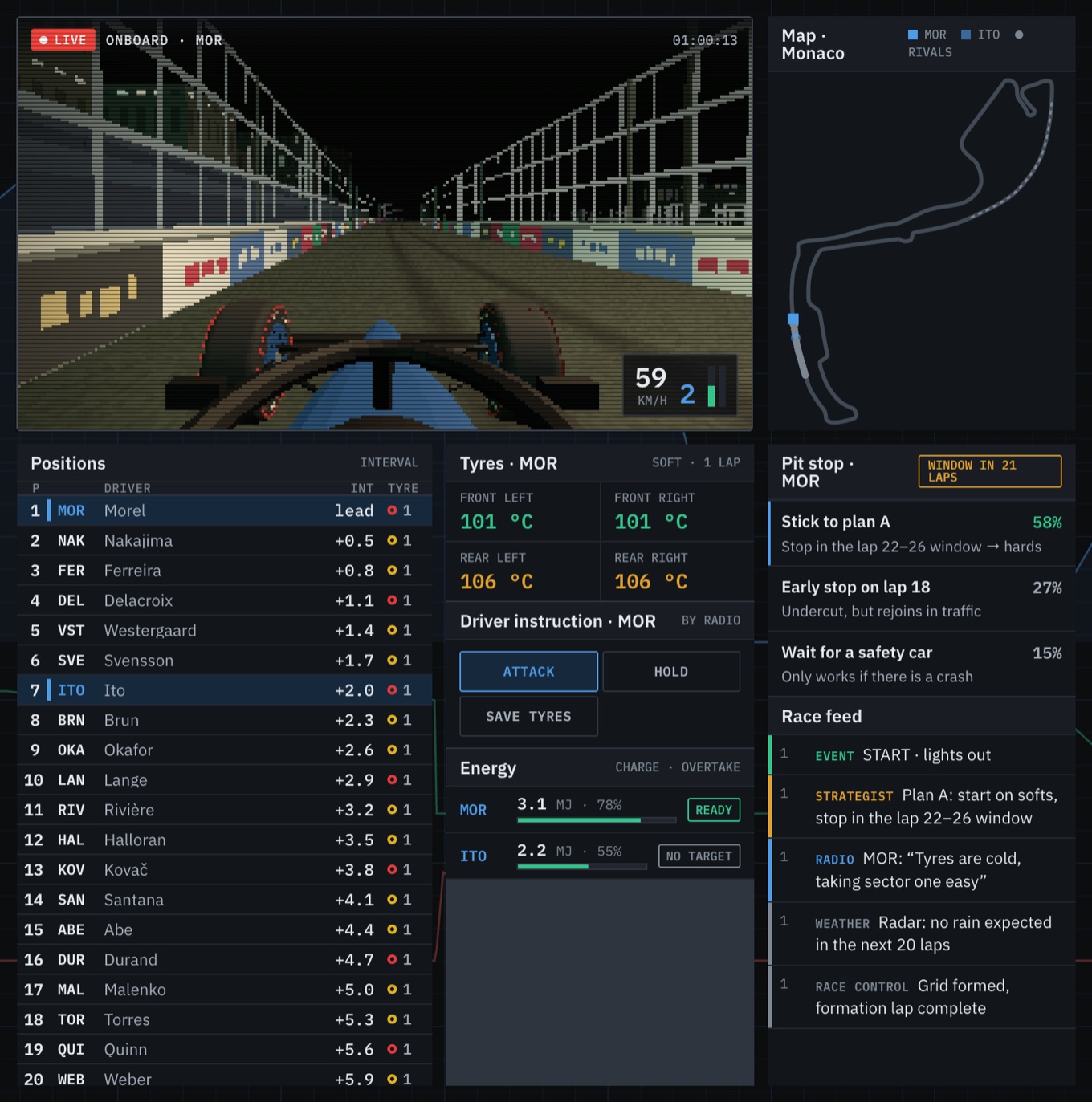
The driver drives the car himself. In each phase of a corner he runs at his own share of the limit, and a mistake is going over it. He gets tired, picks the pace, saves the tyres, attacks and defends on his own. He weighs a radio instruction against the tyres, the rival and the risk.
Wheel-to-wheel fighting is still being finished.
Strategy and delegates
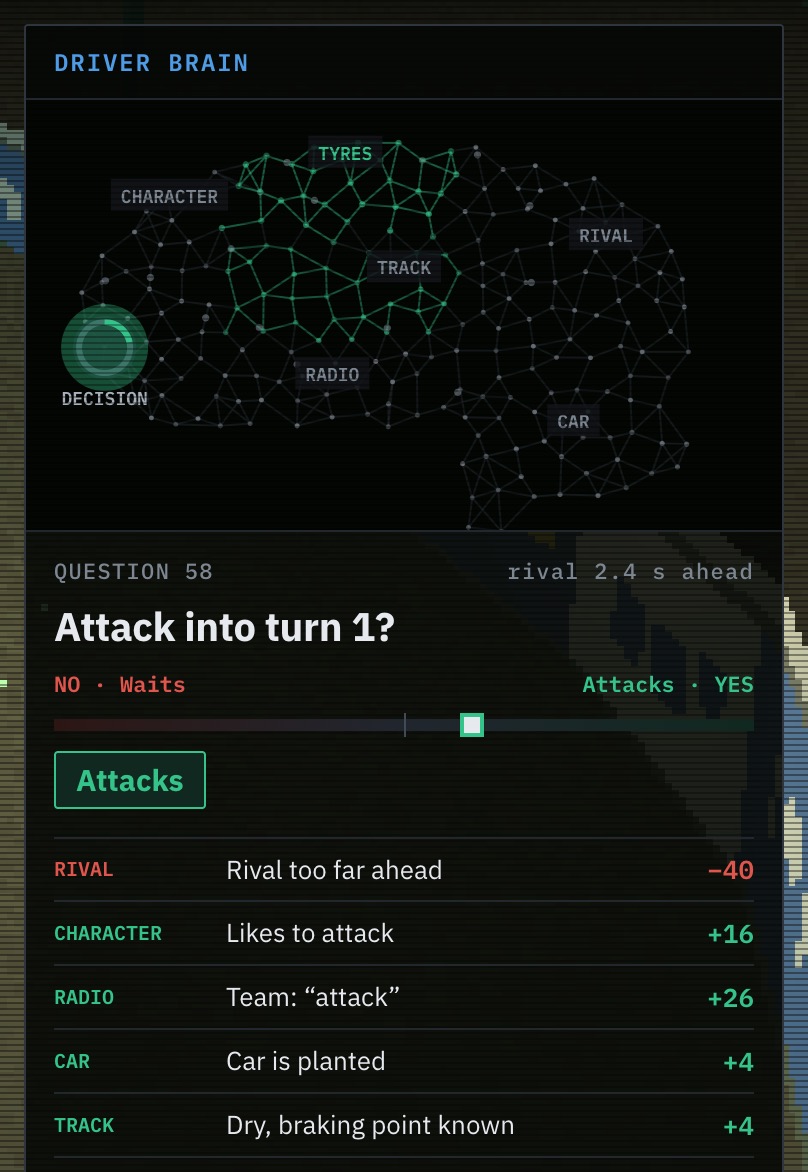
Stints, pit stops, tyre sets for the weekend and the weather forecast. You can make any decision yourself or hand it to a delegate. There are 15 areas you can hand over, each with three modes.
Rivals decide the same way your delegates do: from their people, their estimates and the team's character.
Everything uncertain is shown as an estimate: a range, how sure it is, and where the number came from. A young driver's potential, the gain from a new part, the rain forecast: all you have are estimates. Your rivals too. Nobody sees the truth.
Development and the engine
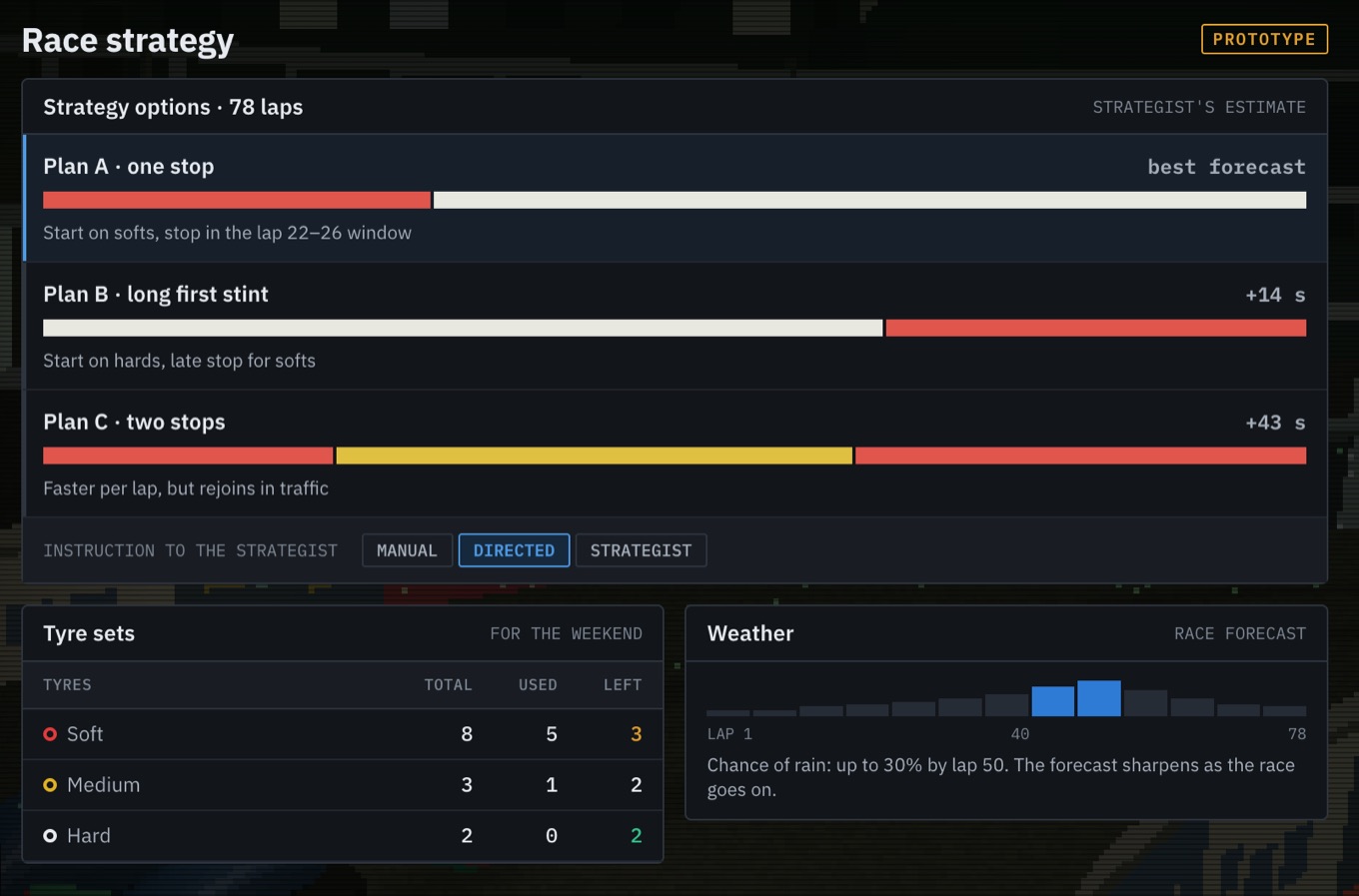
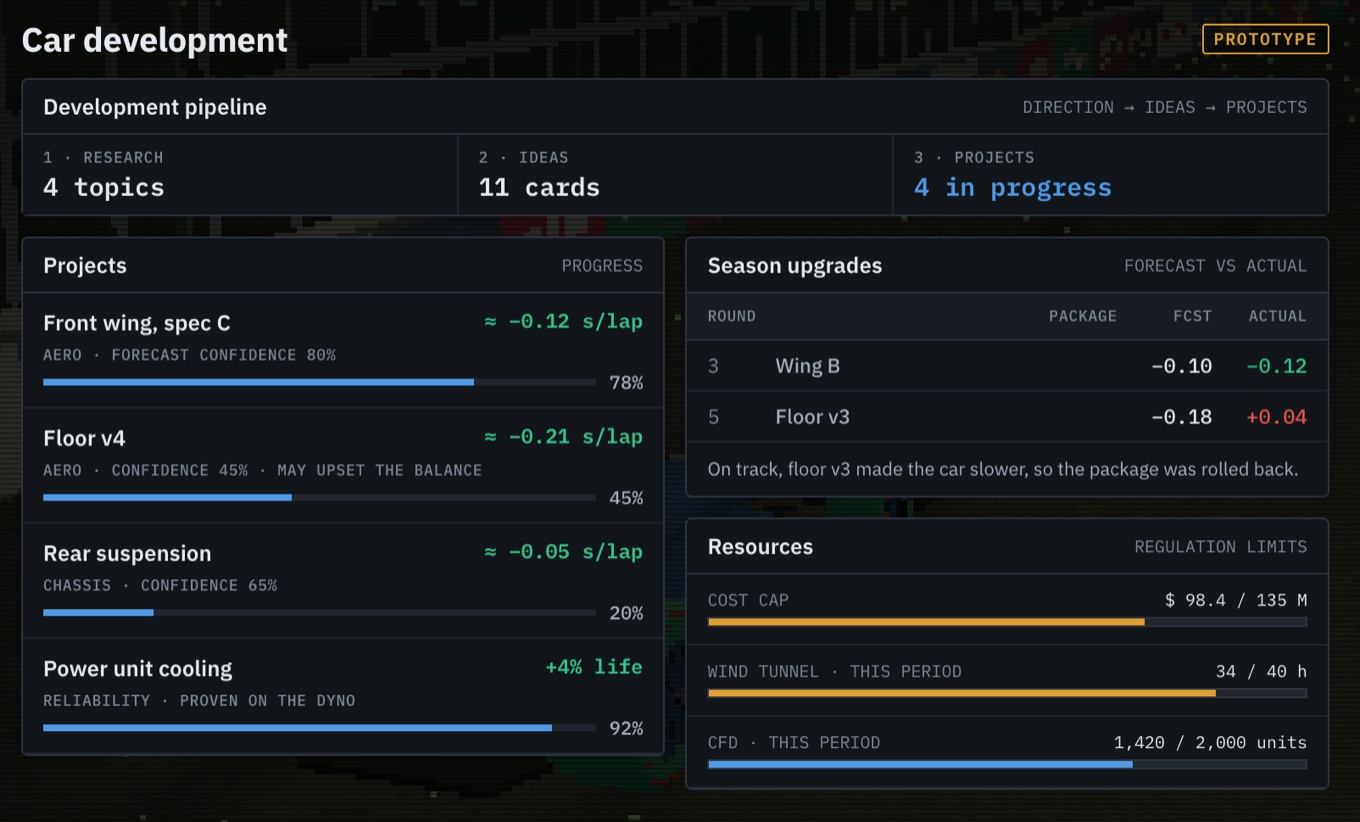
Part projects, wind tunnel and CFD hours within the regulations, reliability. The cost cap, engine life, grid penalties.
In development: a part that looked good in the numbers can turn out slower on track. And your own engine: from a customer engine to your own factory, with decisions on components, dyno runs, homologation and supplying other teams.

The team
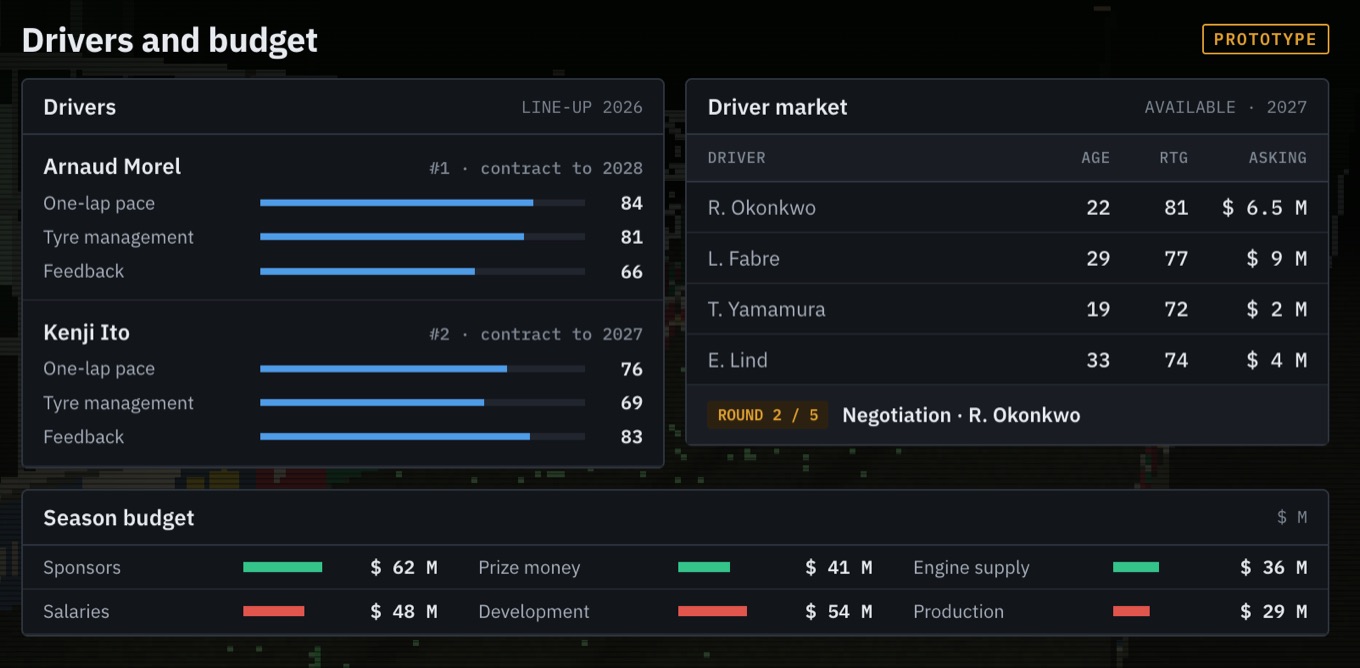
Drivers and staff, the driver market, multi-year contracts, the academy, injuries. Press and social media: sponsors depend on your reputation, and the budget on sponsors. Paddock politics and the team's base.
Decisions take a long time to play out. A three-year contract is a commitment, and a decision made in March shows in September.
A career starts in one of two ways: take over one of 11 teams, or found your own, the twelfth. There are two sets of regulations: 2022 and 2026.
What's ready
The physical race works in full: cars, tyres, brakes, energy, weather and drivers. For now it runs on its own, in our lab. The next big step is putting it into the career.
The team screens are done: development, budget, drivers and staff, press, politics, the base. You can't play a whole season yet: the race has to get into the career first.
Still in progress: weather stations, the radar and a forecast that can be wrong, a breakdown of every number (what made up the 0.3 seconds lost) and the drivers' fights.
Where to play
In a browser on a computer, nothing to install, a screen of 1280×800 or more. Your saves stay with you, and you can export them to a file. Languages: Russian and English.
There is no release date or price yet; we'll share them later.